After November: A Road Map for Districts Planning the Next Bond
Most Texas school bonds didn’t pass this fall. Here’s a look at the paths districts can take as they decide what comes next.
Published Nov. 24, 2026 · Data as of Nov. 15, 2026
A hard November
On Nov. 3, Texas voters approved 24 of 77 school bond propositions. That’s 31%, the lowest share at any Texas uniform election since 2019. Of the 33 districts that held bond elections, 22 passed nothing. The results were difficult statewide, which says as much about this election as about any single district’s plan.
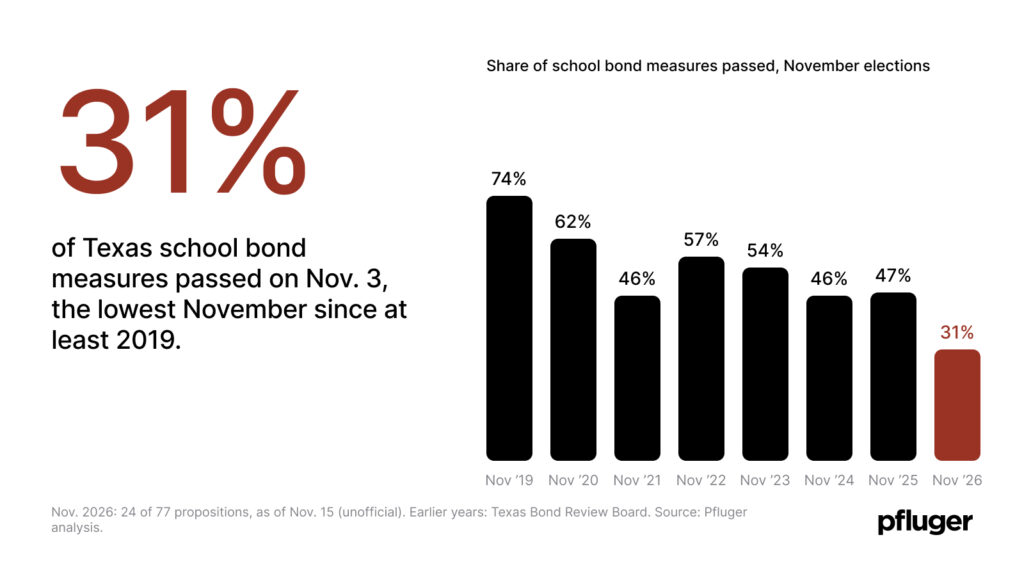
Behind each of those propositions are classrooms, building systems and campuses a community depends on, and those needs don’t end with the vote. To understand what that means for districts deciding their next step, we reviewed more than 1,800 Texas school bond propositions going back to 2019.
On Nov. 3, the losses were heaviest in the state’s largest metro areas: districts around Houston, Dallas–Fort Worth, San Antonio and Austin passed just 2 of their 38 bond propositions.
Many superintendents and boards spent a year or more building these plans with care. They now face the same facility needs and a community that said no, in some cases by only a few votes. As architects, planners and community engagement specialists, we know a bond is never just about buildings. It decides where a community’s children will learn and where its teachers will work, often for decades. There’s no single right response, but there are several well-traveled paths.
Paths districts can take
Districts rarely choose just one of these. Many combine two or three, and the right mix depends on the community.
Start by listening: a community survey and listening sessions
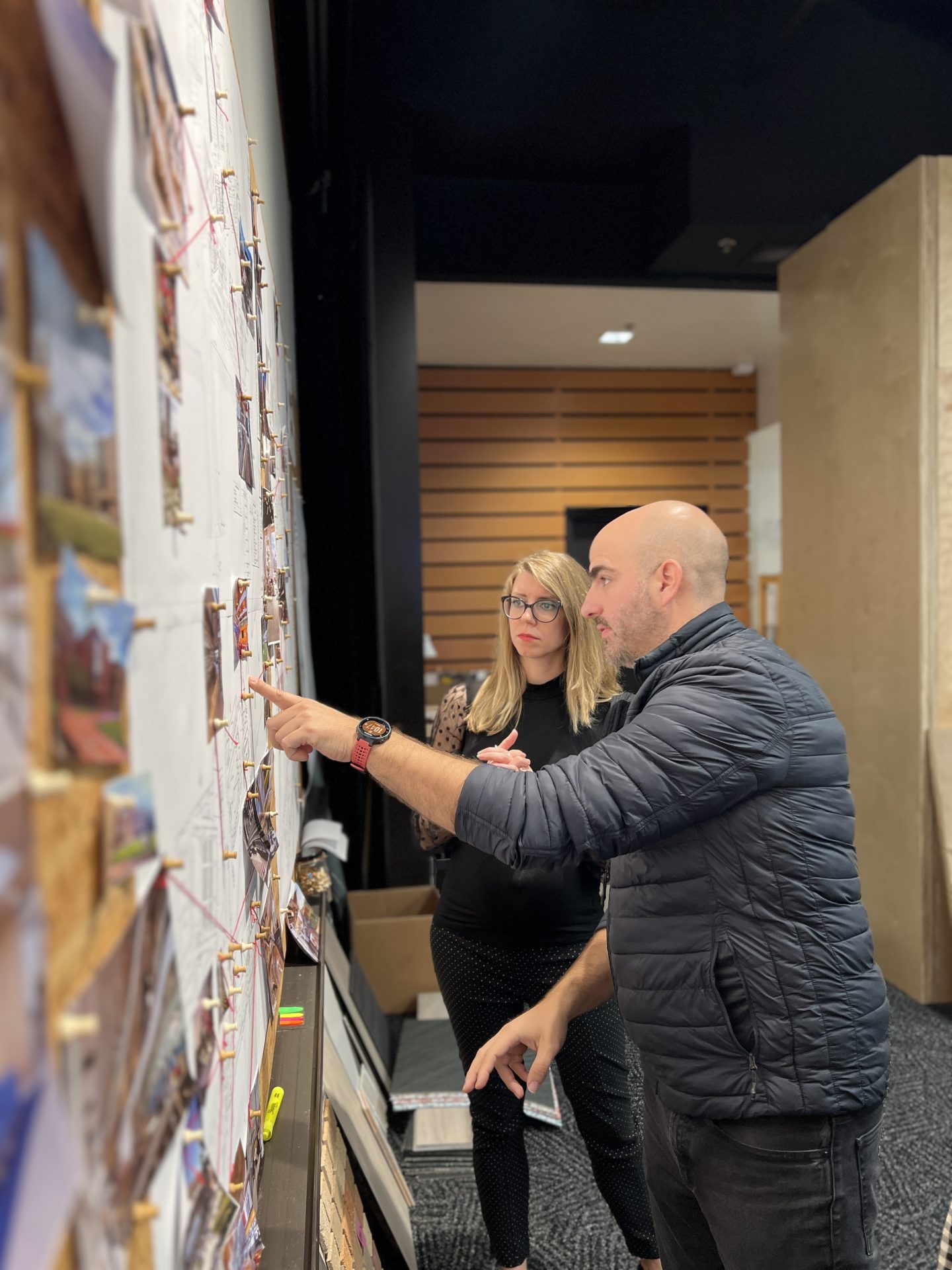
Most districts begin by learning more about the vote before making any decisions. That usually means two tools working together: a post-election community survey, and board and community listening sessions. Many also revisit their facility condition data or long-range facility plan to confirm which needs are most urgent.
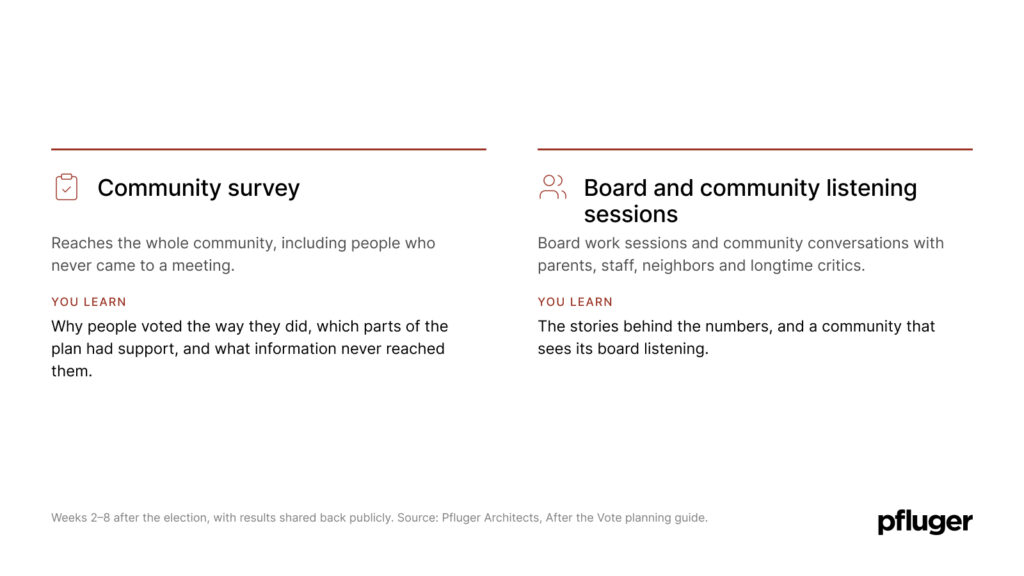
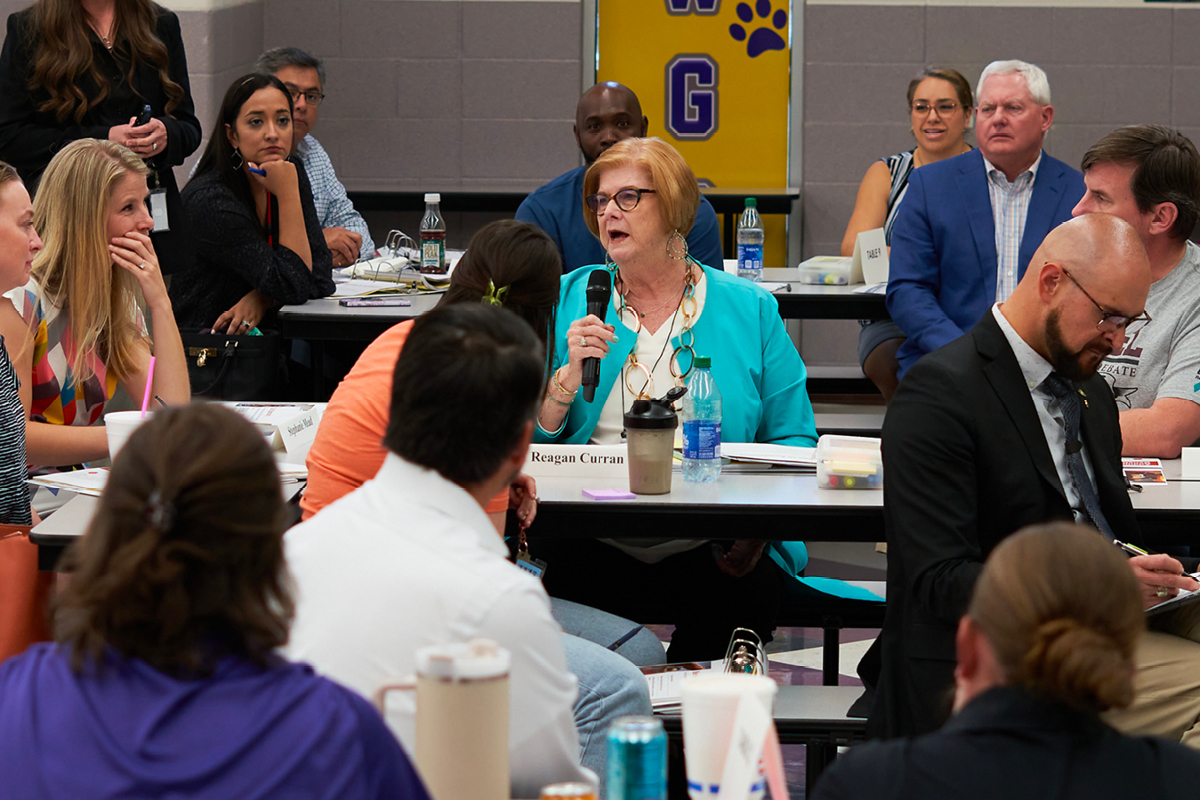
A well-designed survey shows why people voted the way they did, which parts of the plan had support, and what information never reached them. Listening sessions add what a survey can’t: in board work sessions and community conversations, trustees hear the stories behind the numbers from parents, staff, neighbors and longtime critics, and the community sees the board listening.
“After a loss, one of the hardest things to know is who you haven’t heard from. A good survey can reach people who never come to a meeting, and listening sessions put you across the table from them. Together, they tell a fuller story than either one does alone.”
— David Young, PhD, Communications & Community Engagement Director, Pfluger
Return soon with a similar plan
When a loss was narrow and the main proposition had strong support, some districts go back to voters within a year with a plan that’s largely the same. This tends to fit when survey results and listening sessions point to turnout or timing, not the plan itself, as the reason it fell short.
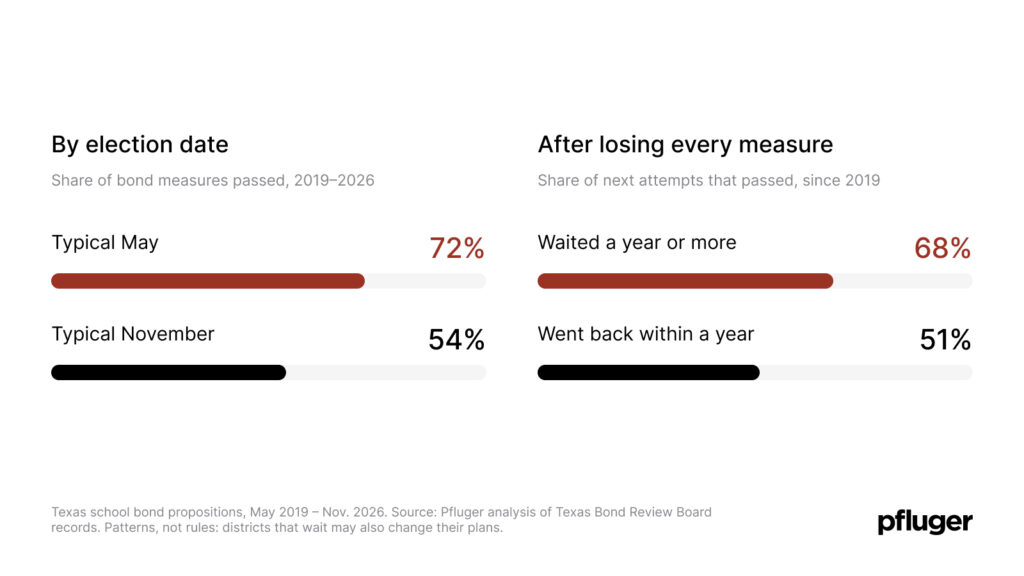
What the record shows: a quick return is the harder path on average. Since 2019, among Texas districts that lost every proposition, those that went back within a year passed 51% of the time; those that waited a year or more did 68% of the time. Districts that wait often change their plans too, so the gap isn’t only about time.
Reshape the plan
Other districts return with a plan the community can recognize as different: a new order of priorities, items separated into their own propositions, or a rethought version of the project that drew the most concern. Reshaping doesn’t always mean asking for less. Survey results and listening sessions usually show which changes matter most to the community.
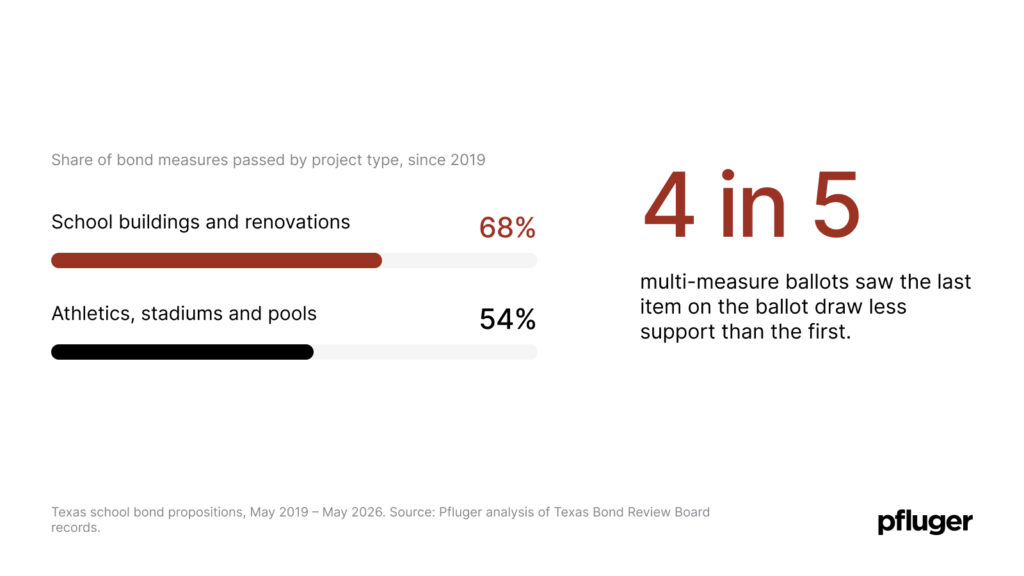
What the record shows: since 2019, propositions for school buildings and renovations have passed about 68% of the time, compared with 54% for athletics, stadiums and pools. In roughly four of five multi-proposition elections, the last item on the ballot drew less support than the first.
From a facilities standpoint, reshaping can take several forms:
- Phasing a project across more than one bond.
- Renovating instead of replacing, or replacing where renovation no longer makes sense.
- Revisiting enrollment projections.
- Refreshing cost estimates as construction pricing shifts.
“I like to look at the spread between propositions before the total. If the core plan ran well ahead of the stadium, voters may already be pointing toward what they’d support. If you go back to voters, the new plan should show the community what changed because of what they told you: what you cut, what you moved to the top, and why.”
— Melissa Ross, Election Strategist, Pfluger
Choose a different election date
Texas districts can hold bond elections in May or November, and the two draw different electorates. November brings out far more voters, many of whom haven’t followed a district’s planning.
What the record shows: in recent years, May elections have passed about 72% of Texas school bond propositions, compared with 54% in November (not counting this year). The two calendars also carry different mixes of districts and propositions, so the date is one factor among several. For 2027, a May 1 election must be ordered by Feb. 12, and a Nov. 2 election by Aug. 16.
Pause and keep the community informed
Some districts decide they aren’t ready to return yet. The roofs, cooling systems and crowded classrooms are still there, so many use this time to keep holding listening sessions and keep the community updated: what they heard, what they’re doing in the meantime, and how people can stay involved.
Weighing the options
A few questions can help a district decide which paths fit. A community survey and listening sessions are where most of the answers come from:
- Where did it come close, and where didn’t it? Precinct results, and which propositions ran ahead or behind, say more than the topline.
- Who didn’t vote? In a high-turnout November, many voters met the plan for the first time on the ballot.
- Was it “no to this plan” or “no to now”? The answer often points toward reshaping the plan or rethinking the timing.
- What did people say, and where? At meetings, in letters to the board, in conversations at the grocery store.
Looking ahead
If your district is weighing its options, Pfluger’s bond planning and community engagement team can walk your board or leadership through a precinct-level look at your results and what your community may be telling you, design and run a post-election community survey, support board and community listening sessions, or take a fresh look at the facility plan behind the bond. Reach our team at communications@pflugerarchitects.com. You can also download our one-page guide, After the Vote, with questions to bring to your next board meeting.
Sources: Pfluger Architects analysis of Texas Bond Review Board school bond records, May 2019–May 2026 (May vs. November comparison: May elections 2020–2026, November elections 2019–2025), and November 2026 results as of Nov. 15, 2026 (unofficial until canvass and recount periods close); 2027 uniform election calendar.